Free Shipping on US orders over
$199
$99
Teslong · Inspection Cameras
For automotive, engine, pipe, HVAC & industrial inspection
Teslong articulating borescopes are designed for inspecting hard-to-reach areas in vehicles, engines, pipes, machinery, HVAC systems, and industrial equipment. Choose from single-lens, dual-lens, 2-way, 4-way, and rotating inspection cameras with different probe diameters, screen sizes, and probe lengths.
Use this guide to compare models and quickly find the best articulating borescope for automotive diagnostics, engine inspection, plumbing, DIY maintenance, or professional industrial inspection.
Shop by use case:
Editor's picks
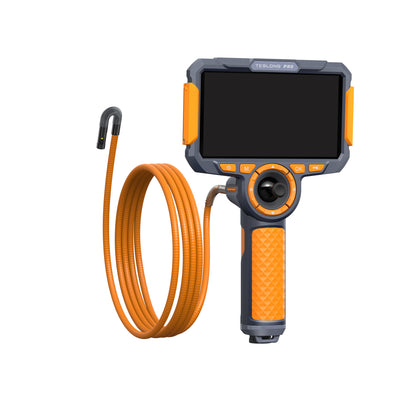
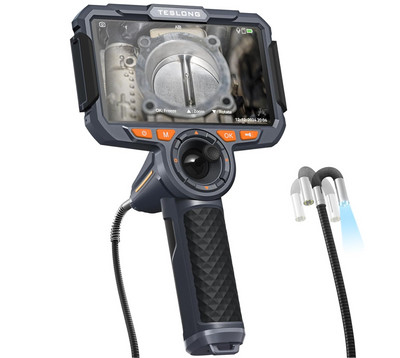
4-way joystick · dual lens · pro-grade
$729.99
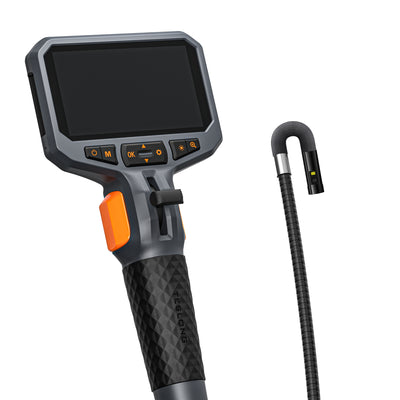
Front + side view on a budget
$119.99
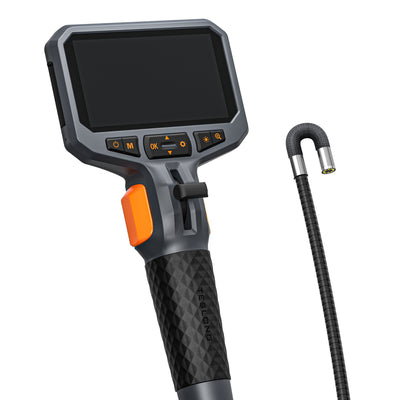
Entry-level articulating scope
$129.99
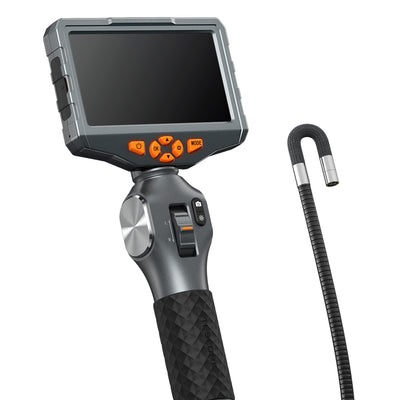
Larger 5″ screen, all-round use
From $279.99
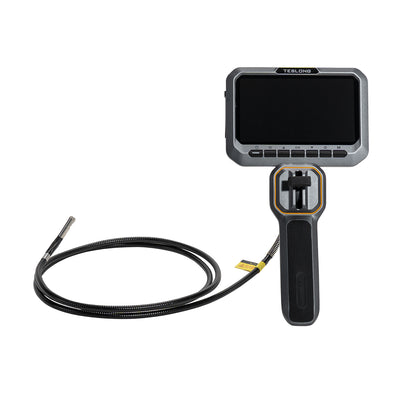
Ultra-slim 3.9 mm probe with 4-way steering
$699.99
Pro 2-way control on a slim 6.5 mm probe
$449.99
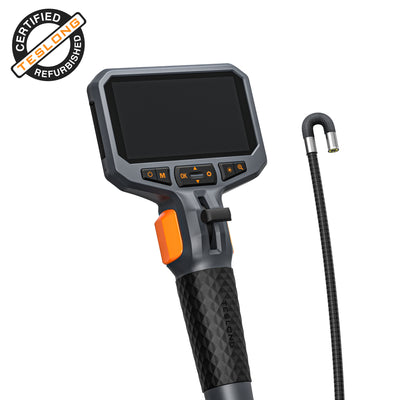
Certified refurbished, lower cost
$99.99
Quick product finder
Answer three quick questions — we'll match you to the best model for your inspection work, lens needs, and control preference.
Your recommendation appears here
Answer all three questions to see the best match for your needs — plus two alternatives worth considering.
All models
New here? The Product Finder above matches you in 30 seconds. Know what you need? Filter the full line-up below.
Application
User type
Recommended for
Showing 16 of 16 models
Best for professional automotive & industrial diagnostics
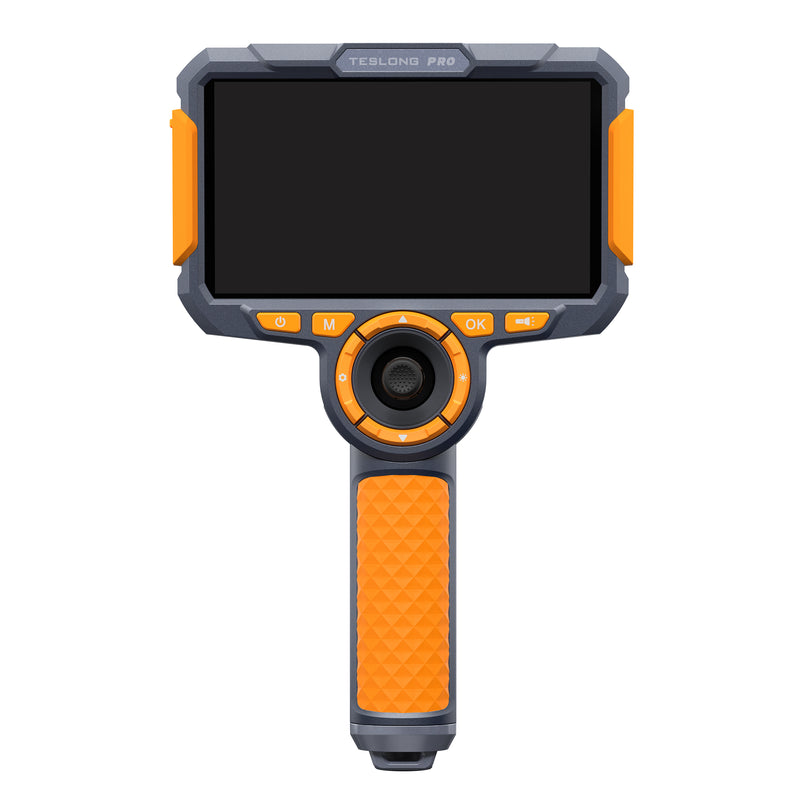
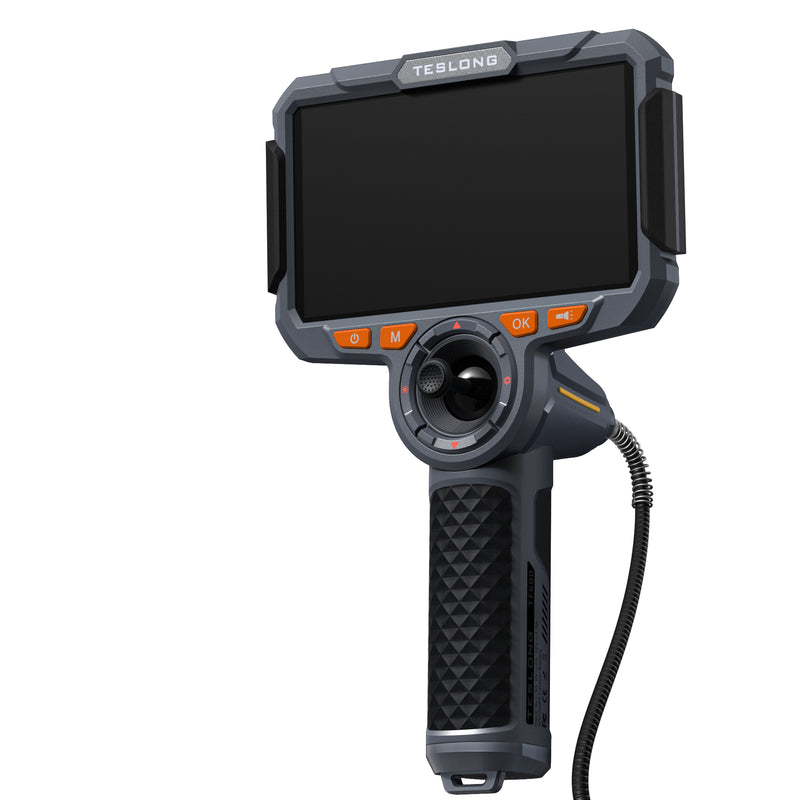
Professional-grade 4-way joystick control and dual-lens viewing for advanced automotive, engine, and industrial diagnostics.
Best for users who want a larger screen and flexible inspection
A step-up model with a 5-inch screen and 2-way 210° articulation for automotive, engine, and general-purpose inspection. Also offered with a 6.5 mm probe.
Best budget pick for DIY users
Entry-level articulating inspection camera for basic forward-view checks and general home maintenance.
Best value for automotive & DIY inspection
An affordable articulating borescope with front and side-view cameras for vehicles, appliances, and general maintenance.
Best for using your phone as the screen
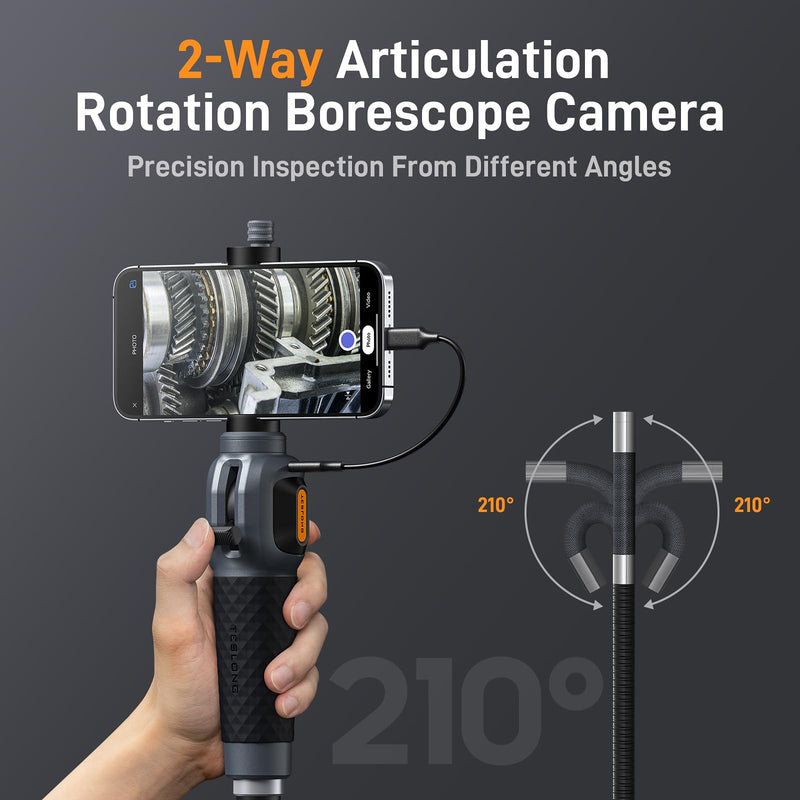
Plug the joystick-controlled 8.5 mm articulating probe into a compatible iPhone or Android phone via USB-C.
Best for 360° viewing with Wi-Fi sharing
A rotating dual-lens probe, rugged 6-inch pistol-grip screen, and Wi-Fi remote viewing on your phone.
Best for 4-way steering with front & side views
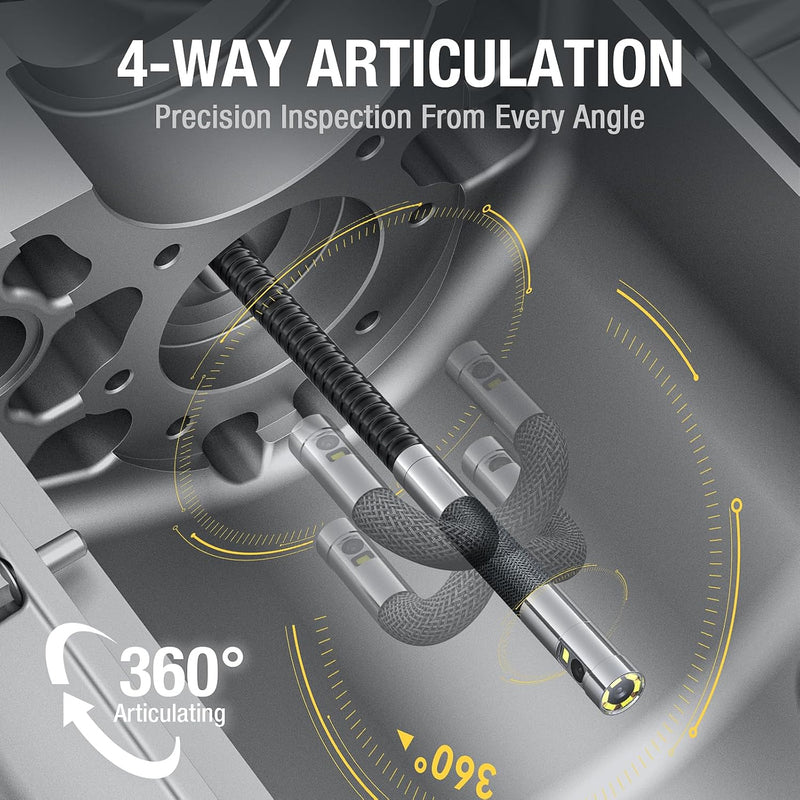
Four-way joystick articulation with switchable front and side cameras on a 6.5 mm IP67 probe, plus a 5-inch IPS screen and wireless image sharing.
Best deal for budget-conscious buyers
A certified refurbished TD450s with the same 2-way articulation and 8.5 mm probe, at a lower entry cost.
Best 2-way control for complex inspections
Precise 2-way 210° articulation on a slim 6.5 mm probe, in a portable modular design for demanding professional work.
Best for the tightest openings
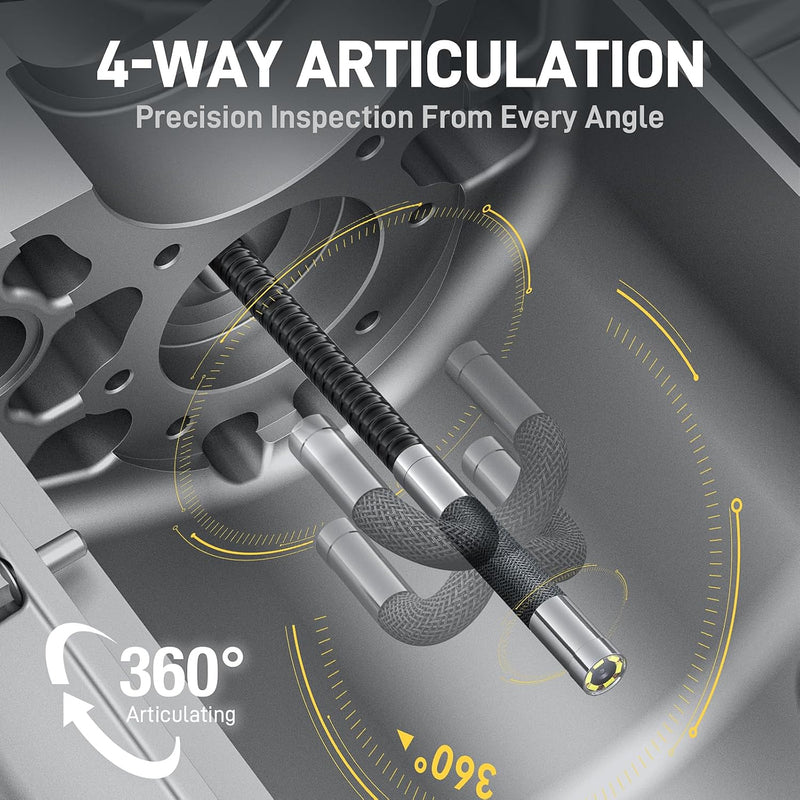
Four-way 360° articulation on an ultra-slim 3.9 mm probe, in a portable modular design.
Best for long-reach pipe & cavity inspection
A rotating lens turns the view without bending the probe, with cable options up to 16.4 ft for drains, pipes, ducts, and deep cavities.
Dual-lens TD500 on a 6.5 mm probe
Two-way articulation with front and side cameras on a 6.5 mm probe and a 5-inch screen.
Best for slim access on a budget
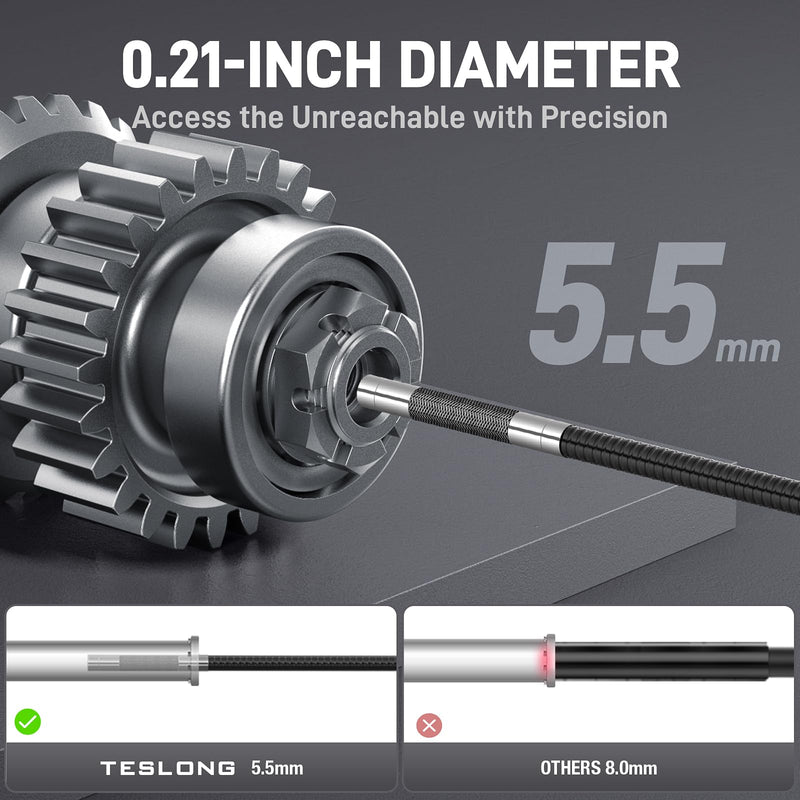
Joystick-controlled 2-way articulation on a slim 5.5 mm semi-rigid probe, with a 5-inch IPS screen and an included 32 GB card.
Best for long runs with a bigger screen
Rotating-lens inspection with a 6-inch pistol-grip screen, Wi-Fi remote viewing, and cable options up to 16.4 ft.
Rotating lens with a 7-inch screen
Rotating-lens inspection with the largest 7-inch screen in the range and cable options up to 16.4 ft.
Single-lens 4-way articulation
Four-way joystick articulation on a 6.5 mm waterproof probe with a 5-inch IPS screen.
No models match all of these filters.
Side-by-side
Every model in one table — lens, articulation, probe diameter, screen, cable length, and price.
| Model | Best for | Lens | Articulation | Probe diameter | Screen | Cable length | Price |
|---|---|---|---|---|---|---|---|
| F6 PRO | Professional automotive & industrial inspection | Dual | 4-way joystick | 6.5 mm | 6″ | 5 ft / 1.5 m | $729.99 |
| TF550 Dual Lens | 4-way steering with front & side views | Dual | 4-way joystick | 6.5 mm | 5″ | 5 ft / 1.5 m | $499.99 |
| TF600 | The tightest openings | Single | 4-way, 360° | 3.9 mm | 6″ | 5.08 ft / 1.55 m | $699.99 |
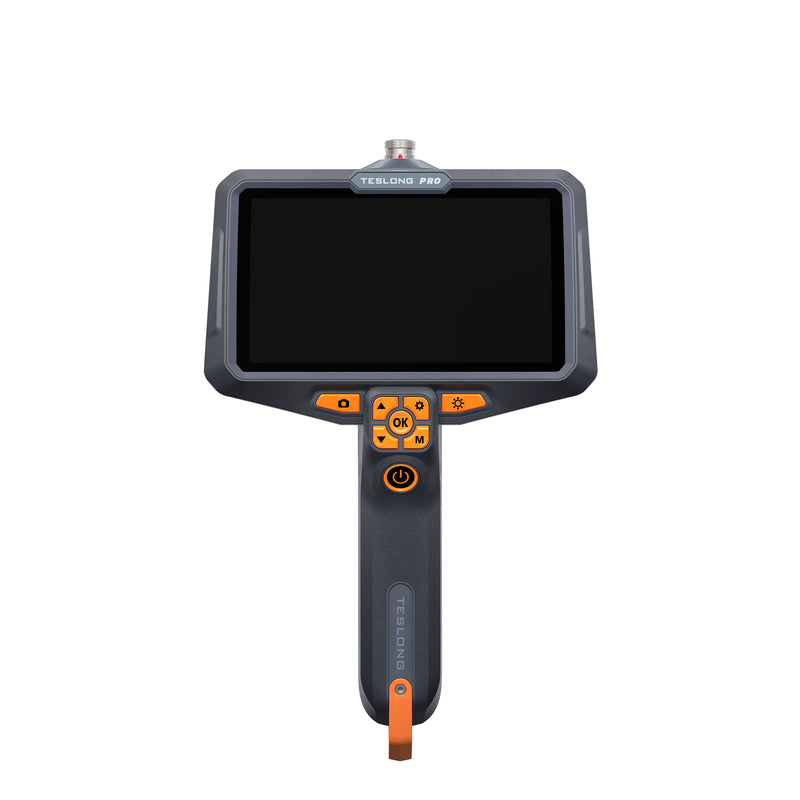
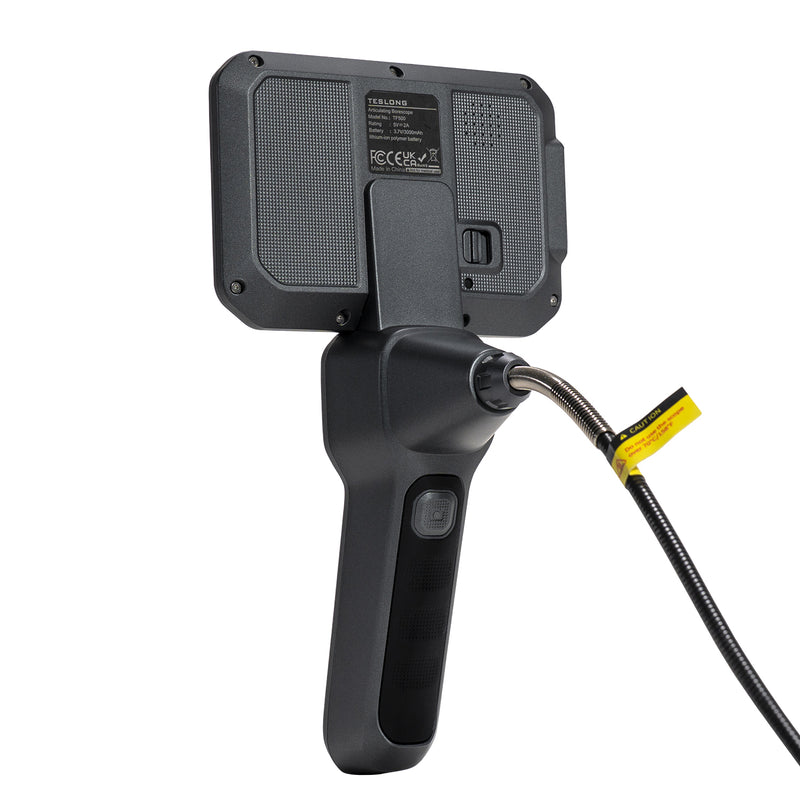
| TF500 | Professional 2-way inspection | Single | 2-way, 210° | 6.5 mm | 5″ | 5 ft / 1.55 m | $449.99 |
| TD500 | Automotive and general inspection | Single | 2-way, 210° | 8.5 or 6.5 mm | 5″ | 5.08 ft / 1.55 m | From $279.99 |
| TD450s Dual Lens | Best-value side-view inspection | Dual | 2-way, 210° | 8.5 mm | 4.5″ | 5.08 ft / 1.55 m | $119.99 |
| TD450s Single Lens | Budget DIY inspection | Single | 2-way, 210° | 8.5 mm | 4.5″ | 5.08 ft / 1.55 m | $129.99 |
| TD300P | Slim access on a budget | Single | 2-way joystick | 5.5 mm | 5″ | — | Sold out |
| TD300 | Using your phone as the screen | Single | 2-way joystick | 8.5 mm | Phone (USB-C) | 5 ft | $79.99 |
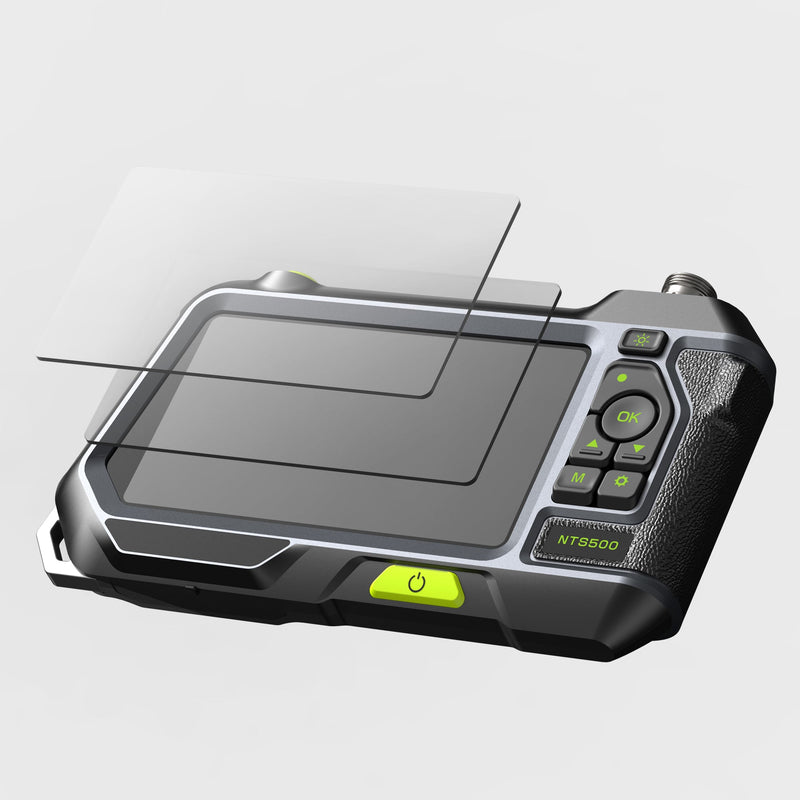
| NTS500 | Long-reach pipe & cavity inspection | Rotating | Rotating lens | 8.5 mm | 5″ | 3.2 / 9.8 / 16.4 ft | Sold out |
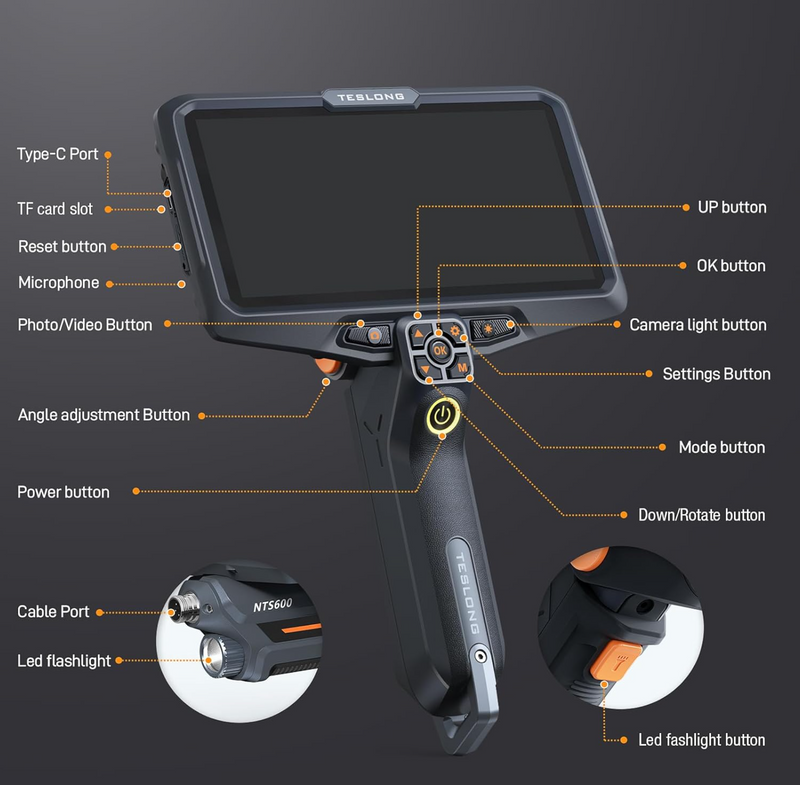
| NTS600 | Long runs with a bigger screen | Rotating | Rotating lens | 8.5 mm | 6″ | 3.2 / 9.8 / 16.4 ft | Sold out |
| T7 PRO | 360° viewing with Wi-Fi sharing | Rotating dual | Rotating lens | 8.5 mm | 6″ | 6.5 ft / 2 m | $409.99 |
| Refurbished TD450S-R | Budget-conscious buyers | Single | 2-way, 210° | 8.5 mm | 4.5″ | 5.08 ft / 1.55 m | $99.99 |
Shop by use case
Find the right inspection camera for the job you actually do — with the features that matter for each one.
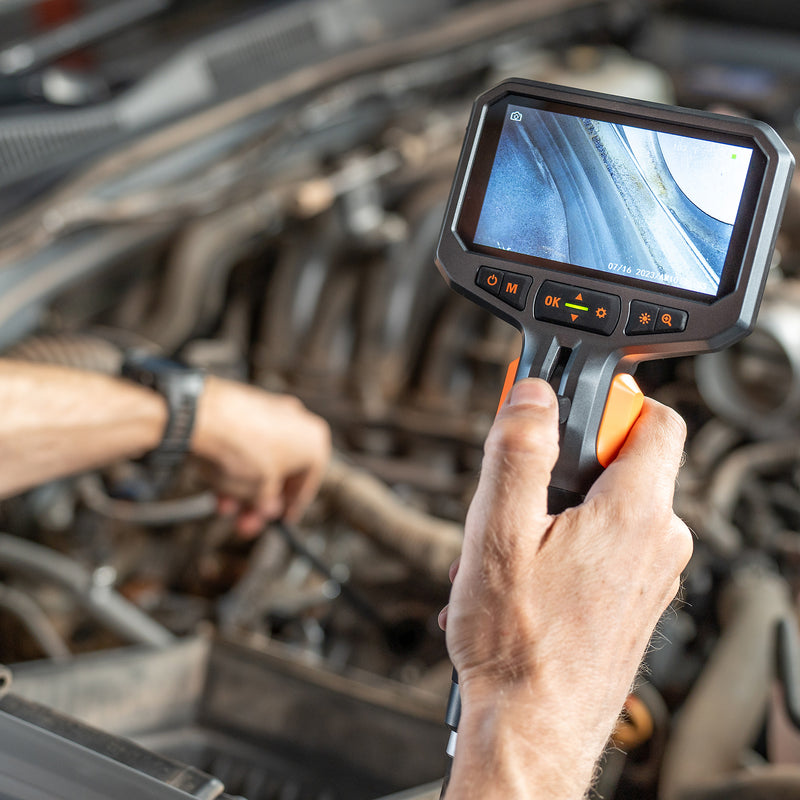
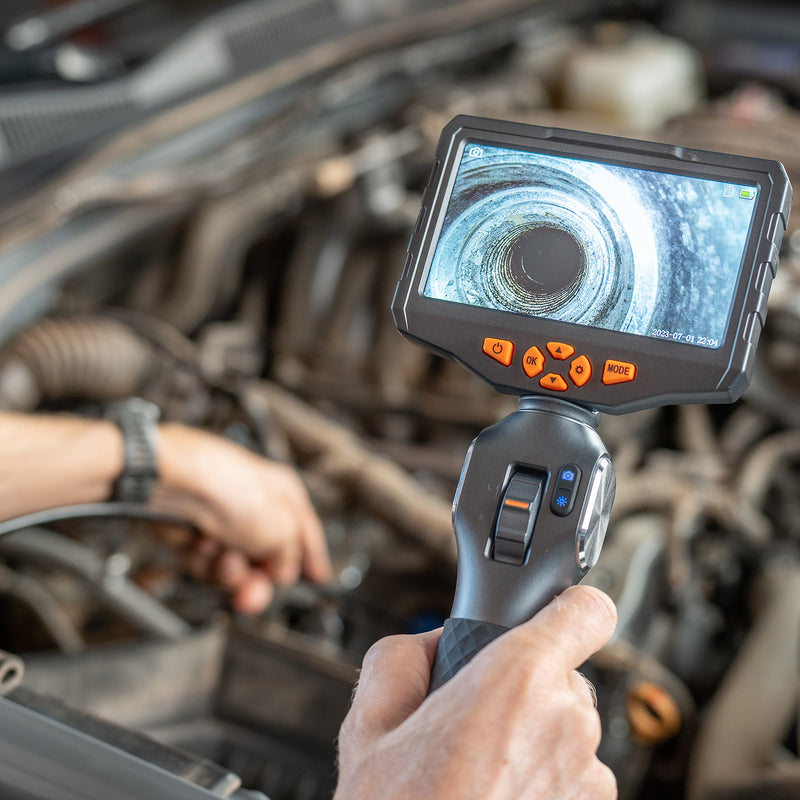
For checking engine cylinders, valves, pistons, spark plug holes, and hard-to-reach areas inside vehicles.
Recommended features
Top picks
For inspecting combustion chambers, piston crowns, cylinder walls, and carbon buildup through spark plug holes.
Recommended features
Top picks
For checking clogs, leaks, corrosion, and blockages inside pipes or drains.
Recommended features
Top picks
For inspecting machinery, equipment, castings, welds, turbines, ducts, and hard-to-access industrial components.
Recommended features
Top picks
For homeowners and DIY users who need an affordable inspection camera for general maintenance, appliances, walls, vents, or vehicles.
Recommended features
Top picks
Model line-up
TD450s, TD500, NTS500, TF500, or F6 PRO — here's what each series is built for.
Entry level
Affordable and easy-to-use articulating borescopes for DIY users, automotive inspection, and general maintenance — in single-lens and dual-lens versions.
From $119.99
Shop TD450s →Step-up
A step-up option with a larger 5-inch screen and more flexible inspection capability for automotive and mechanical use.
From $279.99
Shop TD500 →Rotating
A rotating lens that turns the view without bending the probe — with long cable options up to 16.4 ft for pipes and deep cavities.
Sold out
Shop NTS500 →Professional
Designed for users who need 2-way articulation and better control in more demanding inspection tasks.
$449.99
Shop TF500 →Flagship
Professional-grade 4-way joystick-controlled articulating borescope for advanced automotive, industrial, and mechanical diagnostics.
$729.99
Shop F6 PRO →Buying guide
Choosing the right articulating borescope depends on what you need to inspect, how much control you need, and how narrow the access point is.
For complex industrial inspections, a 4-way articulating borescope with joystick control provides better navigation around corners and internal components. 2-way models handle most bends at a lower cost, while a rotating lens covers side viewing without bending the probe.
If you need to inspect tight spaces, choose a smaller probe diameter — 3.9 mm and 6.5 mm probes fit narrow access points such as spark plug holes. Larger 8.5 mm probes offer better durability and value, and still fit most pipes and inspection ports.
For automotive and engine inspection, a dual-lens borescope helps you see both front-facing and side-facing details without withdrawing the probe. Single-lens models keep things simple and affordable for general forward-view checks.
If you inspect pipes, drains, or long cavities, choose a longer probe — the NTS500 and NTS600 offer up to 16.4 ft. For professional diagnostics, consider larger screens and higher image quality. Set your budget first: there's a capable articulating borescope at every price point, from the phone-based TD300 to the flagship F6 PRO.
Trusted by mechanics & technicians
Every model is built for real inspection work — from weekend DIY checks to daily professional diagnostics.
Automotive, mechanical, plumbing & industrial inspection
Probe diameters from 3.9 mm to 8.5 mm and cables up to 16.4 ft
Single, dual, 2-way, 4-way and rotating inspection options
Standalone monitors on most models — or use your phone with the TD300
Free US shipping over $199 and a 30-day money-back guarantee
FAQ
Common questions about articulating borescopes — what they are, and how to pick the right one.
An articulating borescope is an inspection device with a steerable and pivoting camera. The tip of the probe has a camera and points in any direction you need to inspect in tight spaces. Articulating means to be connected by joints or hinges. A borescope is an instrument used to inspect inside small spaces. usually with a camera probe. Combine the two, and you have a steerable camera probe ready to go into small spaces for easier diagnostics.
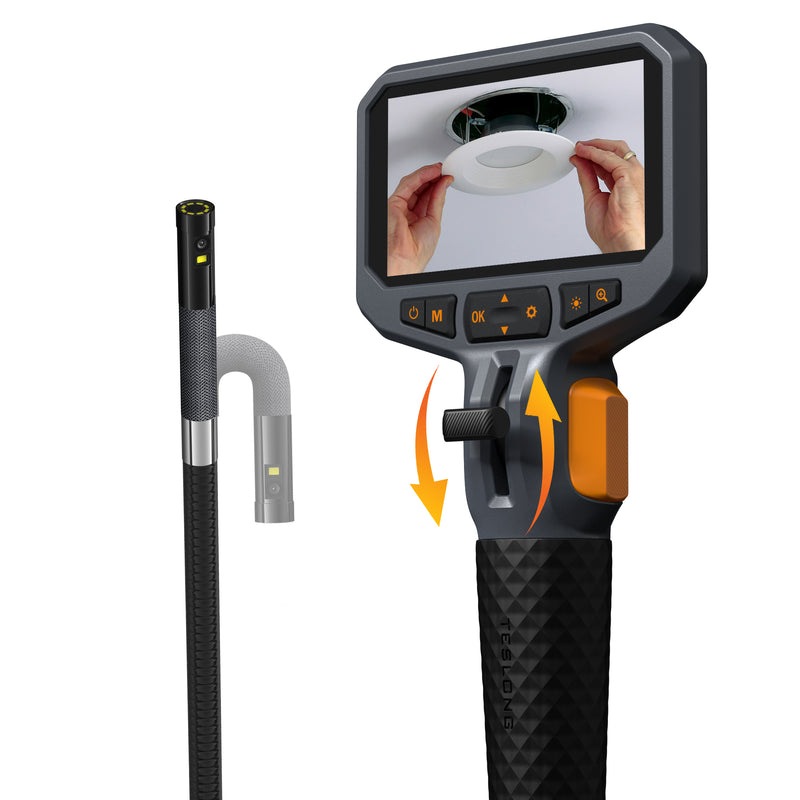
Articulating borescopes come in four different types depending on how many directions the probe tip can bend. The four types are a one-way, two-way, four-way, and a joystick. With the last, the joystick-style can be manual or electric. A light around the tip of the camera also helps with visibility to better see in tight spaces. Additionally, a long cord allows you to slide the camera into hard-to-reach areas with ease.
Also, an articulating borescope includes some type of screen to display what the camera sees. Some include a screen, while others use an eyepiece. Furthermore, some work with a smart device like a phone, tablet, or computer using either a USB cord or a wireless connection. Finally, one key element that makes the borescope articulate is a steering wheel or joystick that controls where the camera probe looks and how it bends.
Next, many borescopes are waterproof or water-resistant and have internal steel wires for wear resistance. The long thin tube makes it easy to wind the borescope into tight spaces. Finally, articulating borescopes have heat sinks and temperature controls to prevent the camera from overheating.
Most articulating borescopes are used for mechanical or pipe inspections. A variety of industries can use this type of scope, including aircraft, vehicle, HVAC, power generation and electricity, energy, gas, oil, maintenance, manufacturing, and mining. This useful tool can help with home DIY car and motorcycle repair as well.
Technicians in a variety of fields can benefit from using an articulating borescope. Anything mechanical, such as cars, boats, and airplanes, will have engines with small parts that are hard to access. These scopes improve safety by providing thorough and accurate inspections with minimal contact or reduced disassembly.
Yes, articulating borescopes can record video and photos. Many can capture live video and high-definition images for on-the-spot inspections. The options that connect to a smart device can capture videos and images and store them on your phone or tablet. Most offer a preview mode, playback mode, and a menu mode for easy application and help to store both.
Check the resolution of the camera before purchasing and make sure it offers the quality you want. Also, if you are performing live inspections make sure you get a borescope with a large enough screen to see everything well. If you want a larger screen, consider choosing one you can use connected to a smart tablet for a bigger view.
Make sure the camera stays protected when not in use to keep the camera in working order. Store it in a soft cloth in a storage container to prevent scratches. Always clean the scope after use.
Before you can use the borescope, you will need to charge the device or ensure it has the necessary batteries or wall plugs. After charging, keep the probe tube straight and extended for insertion into the inspection area. Before using, check the inspection probe for dust, scratches, defects, or damage to make sure you see the inspection area clearly.
Insert the camera probe into the area of inspection, gently taking your time. Do not use force, and make sure the camera is on so you can see where you are going. Once you have reached the area you desire, you can now articulate or move the camera as needed. Some articulating borescopes allow you to lock the bending angle to make sure the camera stays in place. If so, remember to unlock the bending angle before removing the tubing and camera from its location.
To remove the borescope, pull slowly and gently without force. After use, make sure to wash the probe and cord to remove any dirt. Use a soft cloth on the camera to prevent scratching the lenses. While many articulating borescopes can handle some heat, avoid using it in high temperatures to ensure the longevity of the device. Store the borescope in a case in its natural, relaxed position in a cool, dry, and safe location.
Do not submerge a borescope unless it says it’s one hundred percent waterproof, as this can cause damage and may cause electrocution. Also, never insert the probe into a moving part or component. Always operate the borescope within the temperature range advised by the manufacturer.
Articulating borescopes provide visual access to small areas without the need to remove parts to gain access to hard-to-reach areas. As a result, the technology allows you to find issues faster and with less work.
Moreover, the articulating head camera gives you a broader range of vision so you can inspect a bigger area, even in tight spots. Not all applications will benefit from a moving head, but the articulating feature usually isn’t a hindrance.
With the wide range of uses, an articulating borescope can provide a very thorough inspection without the costly disassembly. Furthermore, some areas are very tight even when pulled apart, making them difficult to see inside. Overall, the tool can reduce the cost of inspection and maintenance while improving how items work.
An endoscope is traditionally the medical term used to describe a tool for doctors to aid in surgery. Frequently though, the term endoscope is being interchanged with the term borescope. They both do the same things, but the ones used for medical purposes are built to much higher standards. Both endoscopes and borescopes are available with articulating heads–this allows them to see a larger area than with a static camera probe.
Both provide a long flexible cord that winds into tight spaces. Also, both provide a camera with light so the operator can see in dark places and also take photos and video. Each can also work with a built-in screen or a smart device.
Teslong provides a variety of endoscopes, borescopes, otoscopes, and accessories to help solve problems, save time and also save money. We spent decades creating and developing innovative digital products to help people solve problems and make life easier and better. Our focus is on manufacturing and exporting high-quality scopes for both consumer and industrial uses with state-of-the-art technology for affordable prices.
Try one of our borescopes, and you will have thirty days to try and return. We stand by our products and will work with you to fix any problems. Furthermore, you can reach us online, by phone, or with live chat to get all the information and assistance you need. We ship worldwide and even offer rewards to help our customers enjoy their products and get the most use from their purchase.
Start with the articulation your work demands: 2-way handles simple bends, 4-way gives full steering for complex geometries, and a rotating lens covers side viewing without bending the probe. Then match the probe diameter to the smallest opening you inspect (6.5 mm fits tighter bores, 8.5 mm is tougher and more affordable), and pick screen size and cable length for your workspace. Professionals should also consider dual-lens models, which add a 90° side view for faster, more complete inspections.
A single-lens borescope has one forward-facing camera, which keeps the price low — ideal for general DIY checks. A dual-lens borescope adds a second side-facing camera, so you can switch between forward and 90° side views without withdrawing the probe. If you inspect cylinder walls, pipes, or cavities where a side view matters, a dual-lens model like the TD450s Dual Lens or F6 PRO saves significant time.
A 2-way articulating borescope bends up and down, which handles most pipe and cavity inspections at a lower cost — the TF500 is our professional 2-way option. A 4-way model like the F6 PRO also steers left and right, giving full control inside engine cylinders and complex mechanical assemblies. If you frequently work in tight, multi-directional spaces, 4-way articulation is worth the investment.
Match the probe diameter to the smallest opening you plan to inspect. A 6.5 mm probe (F6 PRO, TF500) fits tighter bores such as engine cylinders, and the 3.9 mm TF600 reaches even narrower openings, while an 8.5 mm probe (TD450s, TD500) is more durable, more affordable, and still fits most pipes, drains, and general inspection ports. Thinner probes generally cost more, so buy the diameter your actual work requires rather than the smallest available.
For professional automotive work, the F6 PRO 4-Way Dual Lens is the top choice — its 6.5 mm probe fits cylinder bores and the joystick gives precise multi-directional steering. The TD500 is a strong automotive and general-purpose option, while the articulating TD450s is the best budget pick for DIY mechanics. If you mainly inspect through spark plug holes, prioritize the 6.5 mm probe diameter.
Tell us what you need to inspect and we'll point you to the right articulating borescope — or line the models up side by side in the comparison table.
An articulating borescope puts steering in your hands: the probe tip bends or rotates so you can see around corners inside engines, pipes, walls, and machinery. Teslong's collection covers every level of control — from affordable articulating probes for DIY maintenance to 4-way joystick models for professional diagnostics.
A straight inspection camera can only look forward. An articulating model lets you steer the view — 2-way for simple bends, 4-way for full multi-directional control, or a rotating lens for side viewing — so one insertion gives you a complete picture of cylinder walls, pipe joints, welds, and internal components.
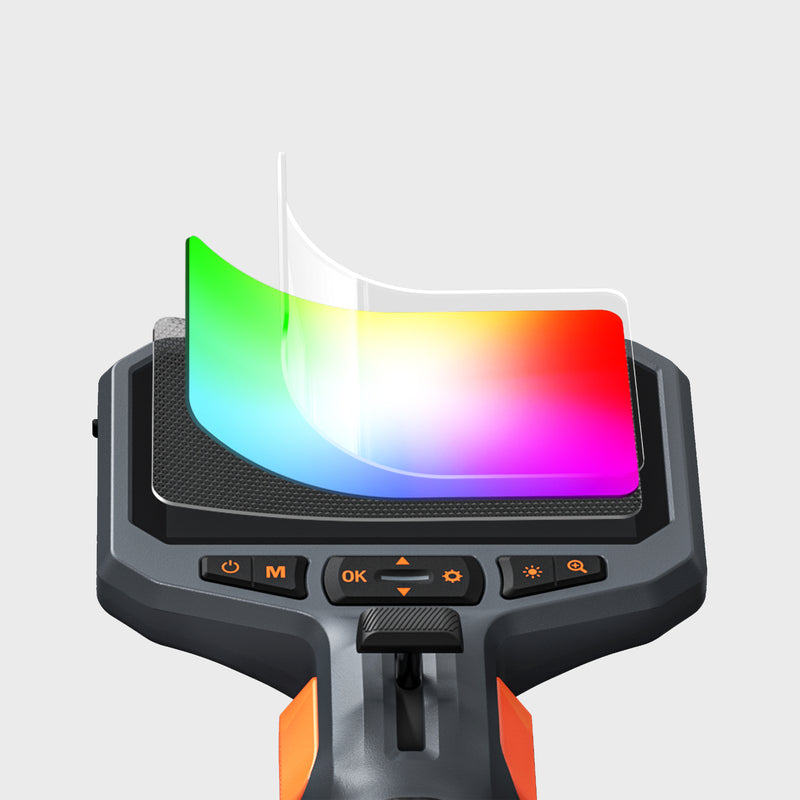
Most Teslong articulating borescopes have a built-in screen for standalone use, and every model comes with a 12-month warranty (3 years on the F6 PRO and T7 PRO) and a 30-day money-back guarantee. Filter by application, user type, or recommendation above — or use the Quick Product Finder to get a match in under a minute.
Need help? Call our award-winning support team at 877.899.8809