


NV-G01 Night Vision Binoculars
Take Your Night Vision to the Next Level
SKU NV-G01
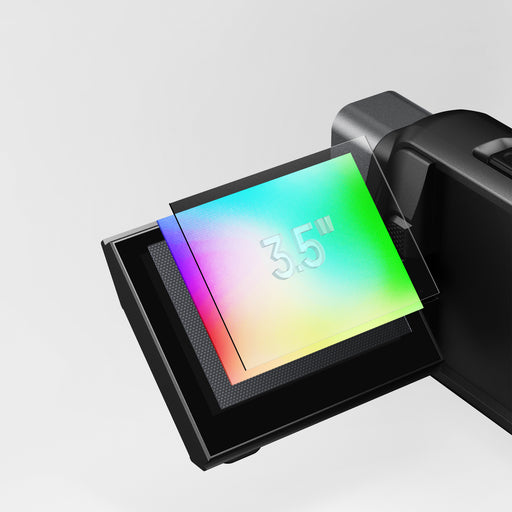
The Teslong NV-G01 Night Vision Binoculars offer a powerful combination of advanced optics, digital imaging, and user-friendly features, making them an excellent choice for outdoor enthusiasts, security personnel, and wildlife observers. At the heart of the device is a vibrant 3-inch high-resolution LCD display (640x360), providing a clear and detailed viewing experience. The high-definition lens includes an adjustable focal length ranging from 0.2 meters to infinity, ensuring sharp image capture across various distances. Users can seamlessly switch between full-color daytime viewing and infrared night vision modes to adapt to any lighting condition.
Equipped with a 3-megapixel camera and capable of capturing photos in resolutions up to 48MP and video in 1080p or 720p, the NV-G01 records every moment in crisp detail. A 32 GB MicroSD card is pre-installed to store your images and footage, with support for USB data transfer and real-time image output to a computer via the Type-C port. The built-in digital zoom function offers up to 10X magnification, allowing users to zero in on distant subjects with precision.
Designed in a sleek gunmetal gray with black accents and constructed from durable ABS, PC, and rubber materials, the NV-G01 balances ruggedness with modern aesthetics. Although not waterproof, it performs reliably in temperatures ranging from 0°C to 45°C (32°F to 113°F). The device runs on a powerful 5000mAh lithium battery and charges efficiently through its Type-C interface. Whether used for daytime observation or nighttime exploration, the Teslong NV-G01 delivers versatility, clarity, and convenience in a compact form.
While traditional visible-light cameras capture images of objects radiating light visible to the naked eye, an infrared camera captures infrared light, which the human eye cannot see. All objects radiate some form of heat energy, but some wavelengths within the electromagnetic spectrum are invisible, including infrared. Sensors in an infrared camera capture a particular range of invisible energy emission (700-1000 nm) and then express each heat value (or wavelength) through a set of corresponding colors. The resulting image is called a thermography and is usually viewable on a thermal imaging viewer, or LCD screen, which displays the thermograph.
Everything with thermal energy emits a certain amount of infrared light. So oftentimes, the terms thermal imaging camera and infrared camera are used interchangeably - these can also be called a handheld thermal scanner. Thermal imaging sensors detect infrared radiation and then express each heat value (or wavelength) through a set of corresponding colors that is viewable on a screen.
Thermal night vision, or infrared monoculars have many uses. They are best for identifying areas of temperature change or difference. An example of this can include finding an animal or human in the woods or on the water, identifying water leaks in a home or in industrial applications, performing security at night and in dark areas, investigating how well something is insulated, finding components that are overheating on a circuit board, and more.
It depends on your application, but in general thermal, or infrared, cameras give you more information. For instance a night vision camera with a visible light sensor can’t see water leaks, overheating capacitors, or calculate the temperature of a surface from a distance the way a thermal camera can.
An infrared illuminator is a light that only emits infrared light. Although infrared light cannot be seen with the naked human eye this still can be a valuable tool. Infrared illuminators can be used to signal to people who are viewing through an infrared camera, thereby allowing them to communicate without anyone else seeing. You can also use an IR illuminator to shine infrared light on a subject and view that subject with a thermal imaging camera if that subject is particularly dark and cold.
From a terminology standpoint infrared radiation is defined by having the wavelength in the fixed interval 0.7 - 300 micrometers, this is a convention of the electromagnetic spectrum. However, the term thermal radiation refers to the thermal radiation emitted by all objects - it does not have a wavelength designation. When it comes to infrared cameras however, they are frequently referred to as thermal imaging cameras.
Infrared cameras can be used for many things. They are best for identifying areas of temperature change or difference. An example of this can include finding an animal in the woods or on the water, identifying water leaks in a home or in industrial applications, measuring temperature of people during a pandemic, investigating how well something is insulated, finding components that are overheating on a circuit board, and more.
A thermal imaging camera can’t fight a fire directly, but it can help firefighters do many things. Firefighting thermal imaging cameras can be used to find hotspots, determine if there is fire behind a wall or door, locate someone lost in the wilderness, or recently one was used to determine that a human was asleep inside a room in a burning building, which then initiated a rescue.
Water, or other fluid, leaks almost always emit a different wavelength of infrared light compared to their dry surroundings. If you view a puddle of water or a stream of drips it will be identifiable to someone performing an inspection with an infrared camera. Infrared cameras make excellent infrared water leak detectors.


Technical Specs THERMAL CAMERAResolution: 256x192 pixels (VOx Uncooled)Lens System: 25 mm; F/1.0Detection Range: 1094 yards (3282 ft)NETD: Less ...
詳細を全部見る

Technical Specs DISPLAYScreen Size: 3-inch LCD ScreenScreen Resolution: 640x360 pixelsCONNECTIONType-C Port:1. Charging the device2. Data Transf...
詳細を全部見る

Technical Specs Model Number: TTM120SInfrared Sensor Resolution: 120x90 pixelsField of View (FOV): 38°-50°Pixel Size: 17 umSpectral Range: 8~14 ...
詳細を全部見る

パッケージの内容 単眼キャリングケースHDMIケーブルType-Cケーブル16GB microSDカード 説明書とマニュアル 安全マニュアル

識別とトラブルシューティング-高温領域と低温領域の視覚化を支援し、高温アラームをサポートし、隠れた電気エネルギー損失、水害、およびその他の熱関連の問題を特定するのに役立つ上限と下限のアラーム値を設定します-隠れた障害をすばやく見つけます。温度範囲は14°Fから662°F(-10から+ 33...
詳細を全部見る