Free Shipping on US orders over
$199
$99
Teslong · Inspection Cameras
Drain and sewer-line cameras, plus short-reach rotating models
Choose a camera for the drain line you can safely access. Compare the distance, camera diameter, cable construction and bends before inspecting a blockage or a suspected pipe defect.
PB800 provides a 30 m (98.4 ft) fiberglass probe with a 20 mm camera; PB700 provides an 8 m (26 ft) probe with an 8.5 mm camera for shorter runs. The rotating-lens handhelds in this collection are for nearby accessible openings, not a substitute for a long push-cable sewer camera. For a broader comparison of pipe cameras and nearby maintenance tools, visit plumbing inspection cameras.
Shop by use case:
Editor's picks
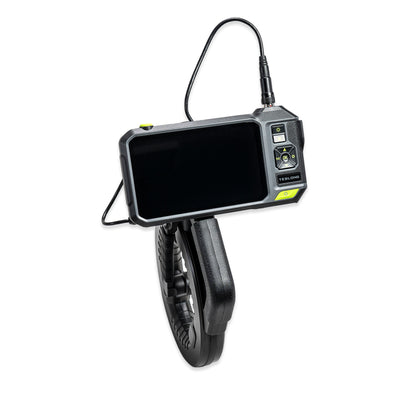
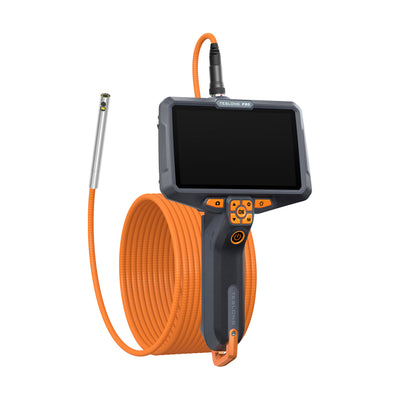
26 ft probe, 8.5 mm camera, Wi-Fi viewing
¥71,300
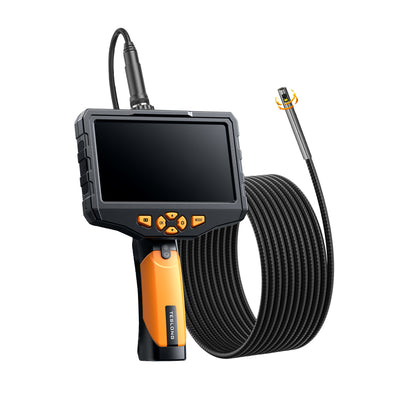
Rotating dual lens, 6.5 ft probe, 3-year warranty
¥78,900
Rotating side lens, cables up to 16.4 ft
From ¥46,200
All models
Drain-line cameras with long probes, plus short-reach rotating models. Filter by job, user or feature.
Job
User type
Recommended for
Showing 7 of 7 models
Drain runs up to 26 ft from a cleanout or drain opening
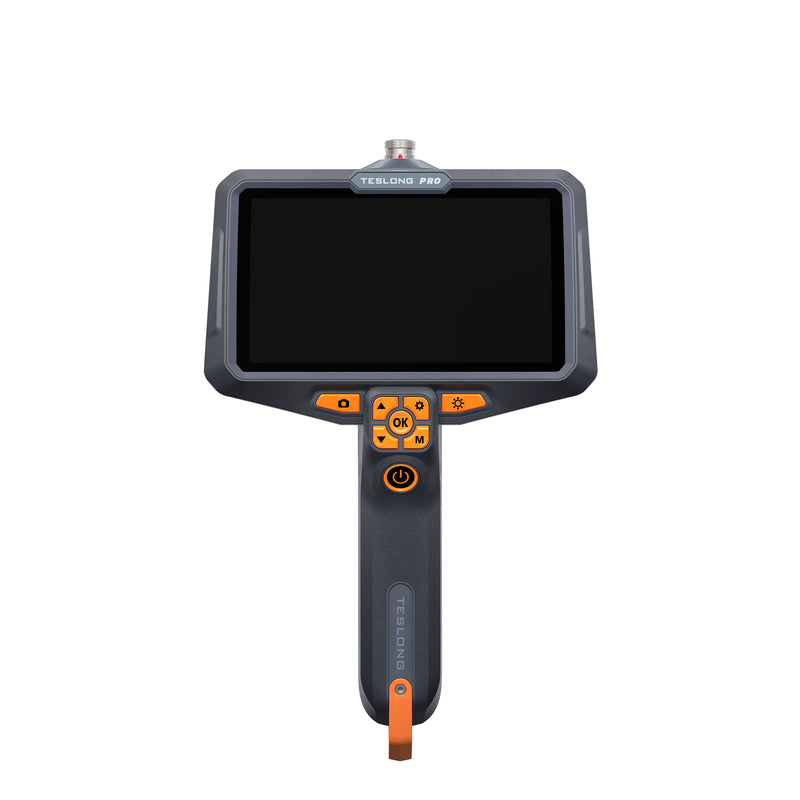
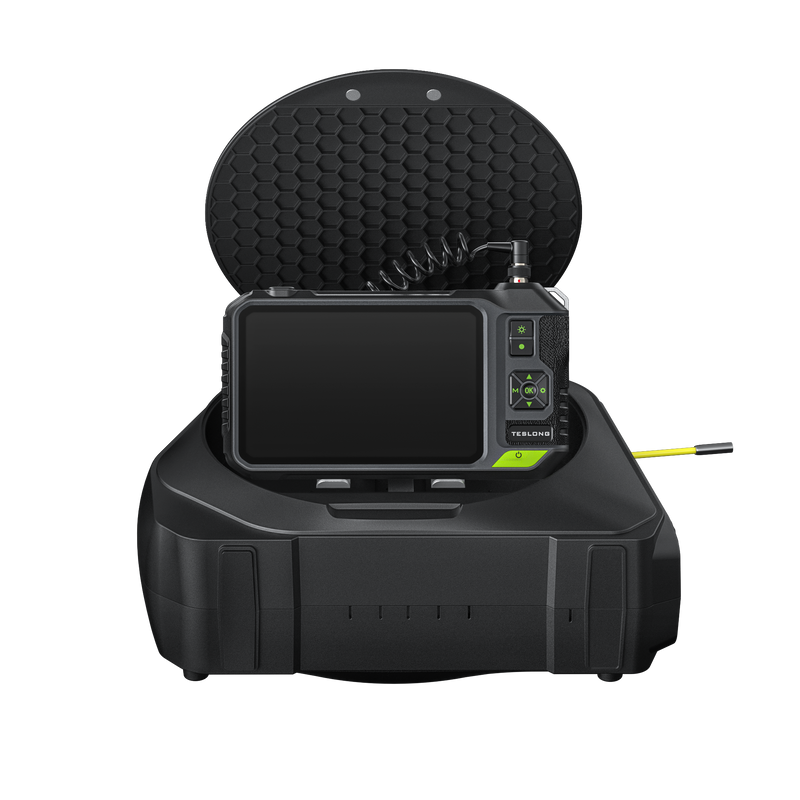
A 26 ft (8 m) semi-flexible probe with an 8.5 mm auto-focus camera, a 7-inch screen, Wi-Fi remote viewing, metal pipe guides and a monitor stand in a carrying case.
Close checks through drain openings and cleanouts at a lower cost
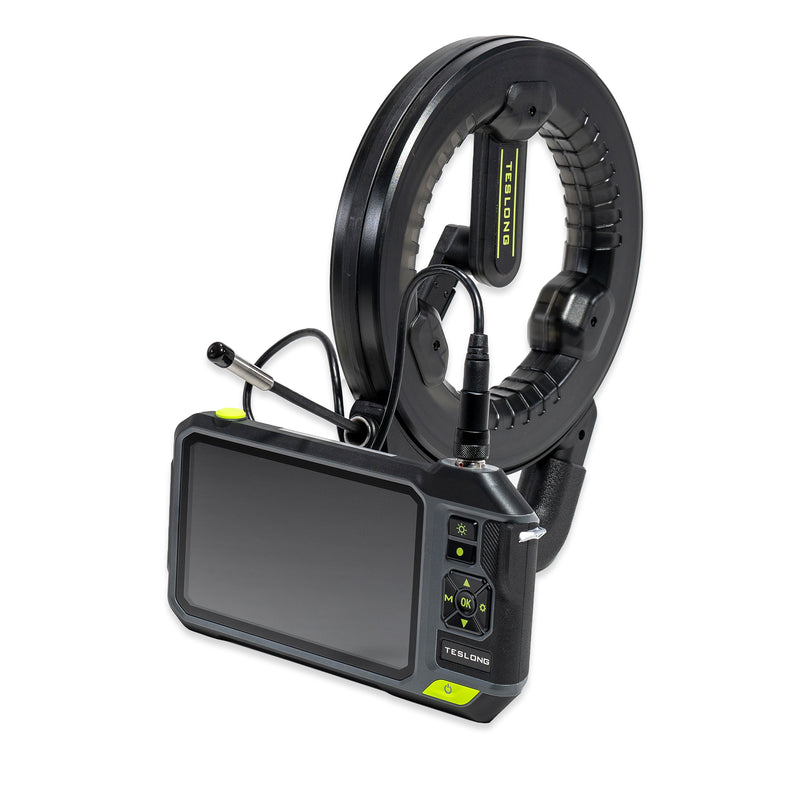
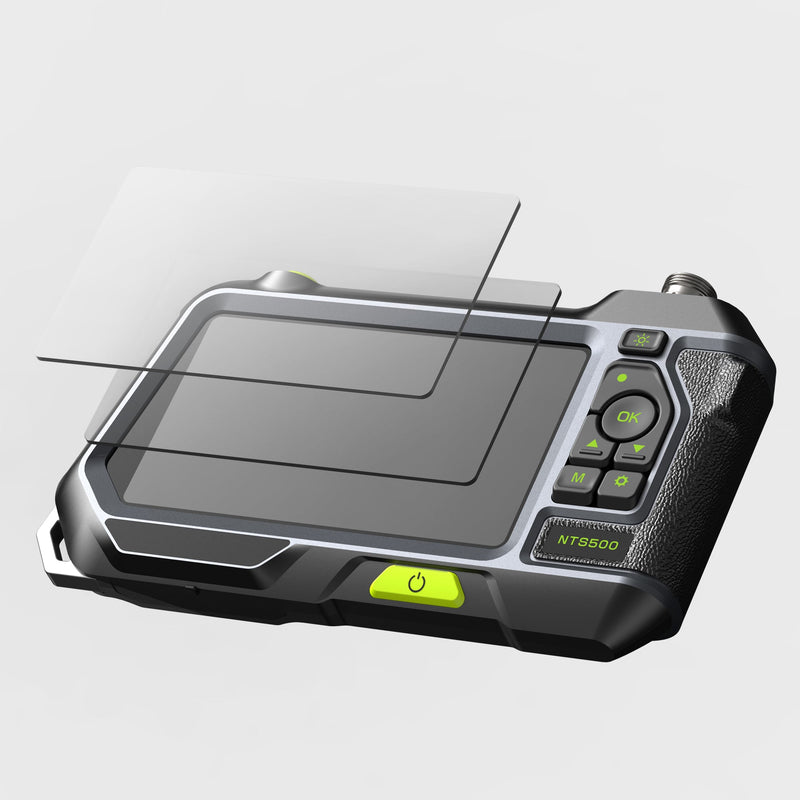
A front camera plus a 90° rotating side lens on an 8.5 mm probe, with 3.2, 9.8 or 16.4 ft cable options, a 5-inch pistol-grip screen and a 5000 mAh battery.
Short, tight sections where you steer the tip
Two-way 210° articulation with front and side cameras on a 6.5 mm, 5.08 ft probe and a 5-inch screen with Wi-Fi remote viewing.
Pipe walls and joints close to the opening, with a 3-year warranty
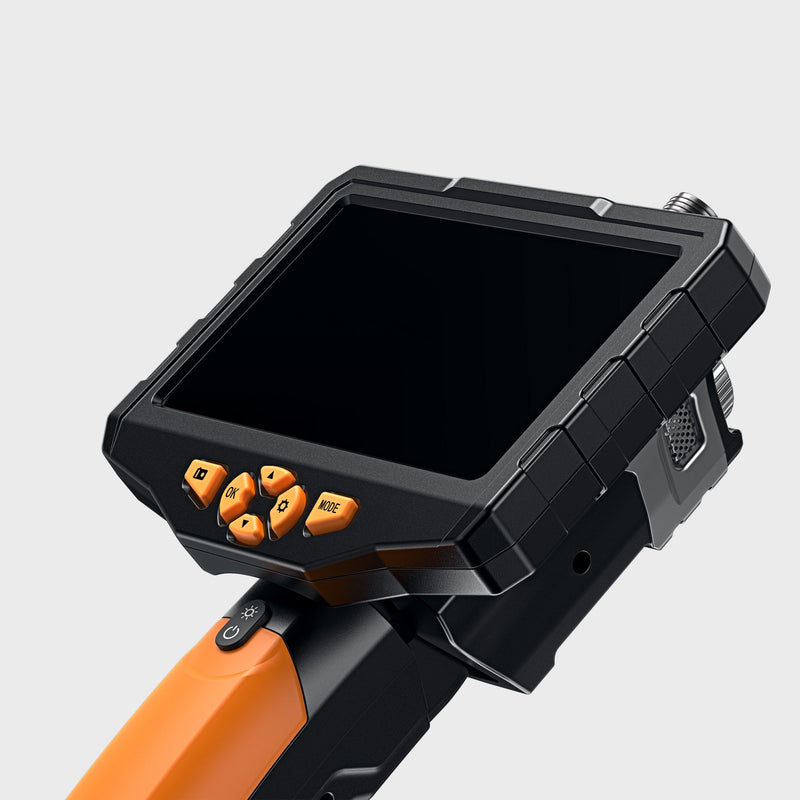
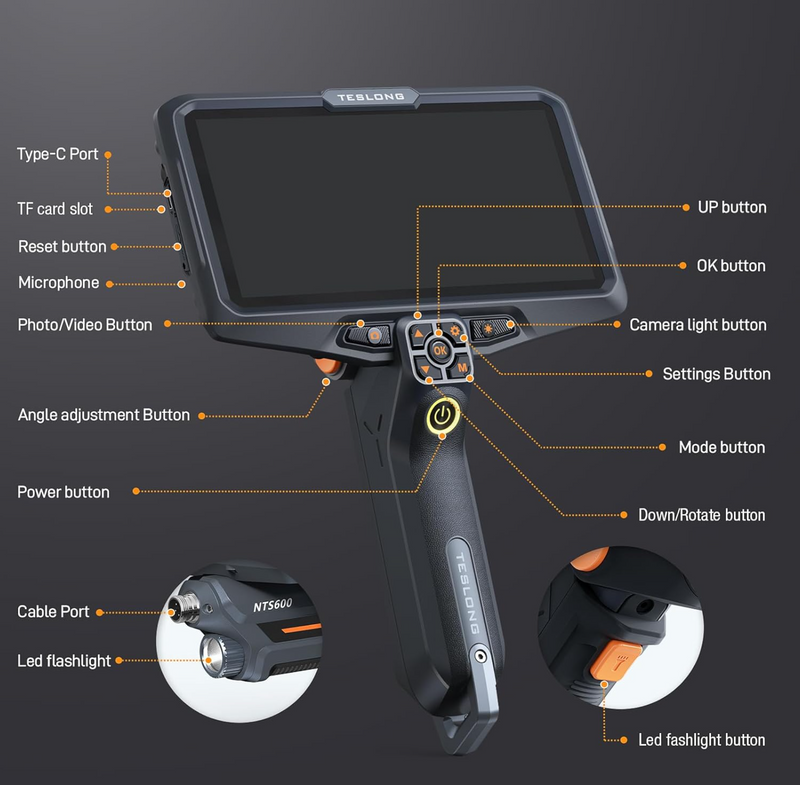
A rotating dual-lens 8.5 mm probe on a 6.5 ft cable, a 6-inch IPS screen with split screen, Wi-Fi remote viewing and a hard carrying case.
Longer drain-line runs where a 20 mm camera fits the pipe
A 98.4 ft (30 m) fiberglass probe with a 20 mm, 110° camera, an 8-inch 1920x1200 screen, Wi-Fi remote viewing, a monitor stand and metal camera guides.
Close checks with a tablet-style 5-inch screen
A front camera plus a rotating side lens on an 8.5 mm probe, with 3.2, 9.8 or 16.4 ft cable options and a 5-inch tablet-style screen.
Close checks you want to stream to a phone
A rotating-lens 8.5 mm probe with 3.2, 9.8 or 16.4 ft cable options, a 6-inch pistol-grip screen and Wi-Fi remote viewing on a phone or tablet.
No models match all of these filters.
Side-by-side
Reach, camera diameter and probe build matter most in a drain line. PB800 is the long-reach option; the handhelds are for nearby openings.
| Model | Probe length | Camera | Lens | Probe build | Screen | Wi-Fi viewing | Price |
|---|---|---|---|---|---|---|---|
| PB800 | 98.4 ft / 30 m | 20 mm | Single, 110° view | Fiberglass, semi-flexible | 8″ | Yes | Sold out |
| PB700 | 26 ft / 8 m | 8.5 mm | Single, auto focus, 75° view | Semi-flexible | 7″ | Yes | ¥71,300 |
| T7 PRO | 6.5 ft / 2 m | 8.5 mm | Rotating dual lens | Flexible, semi-rigid | 6″ IPS | Yes | ¥78,900 |
| NTS300 Rotating | 3.2 / 9.8 / 16.4 ft | 8.5 mm | Front + rotating side | Flexible and sturdy | 5″ | — | From ¥46,200 |
Shop by use case
From the drain line to the job file, matched to the reach each camera really has.
Enter at a cleanout or drain opening and push down the line to check for roots, offsets, sags and buildup. Match the probe length and camera size to the line and the access point.
Recommended features
Top picks
See what is causing a slow drain or backup before you choose how to clear it, then look again afterward to confirm the line is open. A camera views the line; it does not clear it.
Recommended features
Top picks
For openings close to you, a rotating side lens lets you stop at a joint or crack and turn the view onto the pipe wall. These cables are for nearby checks, not for pushing down a long sewer line.
Recommended features
Top picks
Record the line so the homeowner can see the problem, and keep the photos and video for the job file or an inspection report.
Recommended features
Top picks
Buying guide
Start with the line you need to see and the opening you can reach, then pick the camera that fits both.
Measure from the access point to where the trouble is. PB800 reaches 98.4 ft (30 m) and PB700 26 ft (8 m); the rotating-lens cameras have 3.2 to 16.4 ft cables. Probe length does not guarantee passage through every pipe or bend.
PB800 uses a 20 mm camera, so the opening and the line must be large enough for it. PB700 and the rotating-lens models use an 8.5 mm camera for smaller openings. Check traps and tight bends along the route.
PB800 has a fiberglass probe and PB700 a semi-flexible one, built for pushing down a drain run. The handhelds use flexible cables for nearby accessible openings and are not substitutes for a long push-cable sewer camera. Never force a probe through an obstruction.
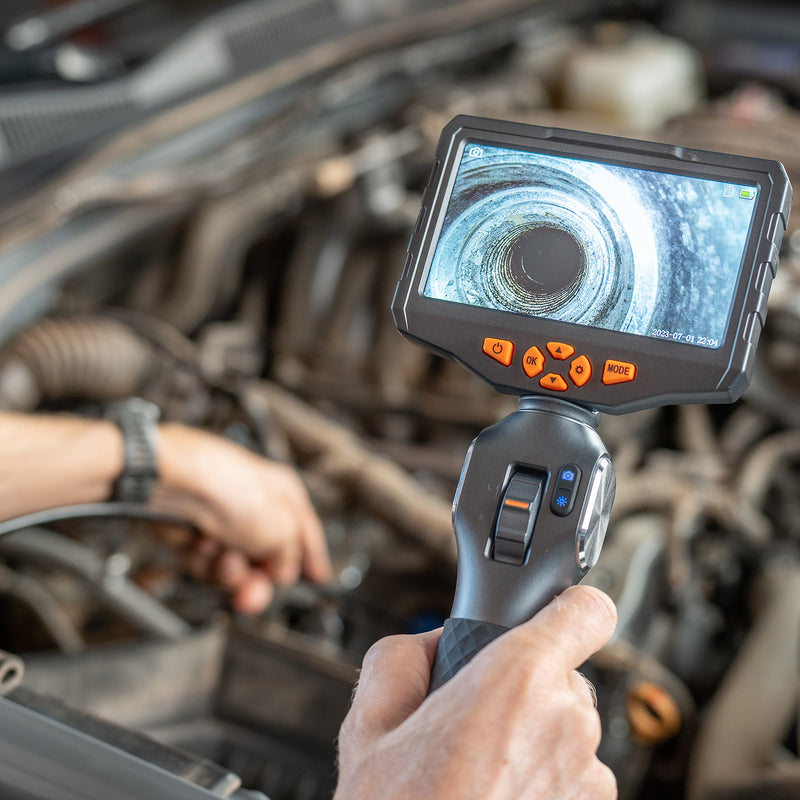
Screens run from 5 to 8 inches, and PB800, PB700 and T7 PRO add Wi-Fi viewing on a phone or tablet. The probes are rated IP67 (up to 1 m for 30 minutes); keep the monitor out of the line and rinse and dry the probe after each job.
Built for drain work
Drain-line and short-reach cameras with the screen built in and support based in the U.S.
Short rotating-lens cables up to a 30 m fiberglass probe
5 to 8-inch monitors, so no phone is needed on site
PB800, PB700 and T7 PRO stream to a phone or tablet
Rated for up to 1 m of water for 30 minutes
Free US shipping over $199 and a 30-day money-back guarantee
FAQ
Common questions about choosing a sewer camera and what a camera inspection can and cannot do.
A sewer inspection camera can detect whether you're dealing with a tree root infiltration; a broken, cracked, or collapsed pipe; major blockage of grease, sediment, or paper; or sagging pipes, causing buildup & eventual blockage. They can help a plumber make an accurate diagnosis of an expensive problem without invasive and destructive inspection. Some may question, “is sewer camera inspection worth it?” but keep in mind the alternative is to dig up the whole pipe to see where it’s leaking - a very labor intensive and destructive process that’s also quite expensive.
Measure the access opening and estimate the distance to the inspection point. Consider the camera diameter, pipe route, bends and cable construction. Probe length does not guarantee passage through every pipe or bend.
PB800 has a 30 m fiberglass probe and a 20 mm camera. PB700 has an 8 m probe and an 8.5 mm camera. Compare these dimensions with the actual line and access point, and review the model instructions before use.
Short-reach inspection cameras can help with nearby accessible openings and maintenance checks. Do not assume their flexible cables can be pushed through a long sewer line. Use the product specifications and route requirements to choose.
An inspection camera is for viewing conditions, not clearing a blockage. Do not force the probe through an obstruction. Consult a qualified plumbing professional when access or the condition of the line is uncertain.
Plumbing inspection cameras are also known as pipe inspection cameras or sewage cams and are special cameras attached to flexible cables for insertion into pipes. Tiny lenses capture video footage deep inside hard-to-reach spaces, with electronic illumination to highlight cracks and clogs that might otherwise go unseen.
A sewer inspection camera is a very small and flexible camera attached to a cable, much like a drain snake. Sewer camera inspection services can use the snake to get to the point in a pipe where a clog or break may exist in the hopes they can remedy the problem with as little invasive behavior as possible. Instead of digging up the whole pipe, the plumber can just dig up where the leak or break is.
If you’ve determined you need a plumbing inspection, sewer camera inspection cost can range anywhere from about two hundred to twelve hundred dollars. The cost depends on where you live and who you call. It also depends on the equipment the plumber uses and how long it takes to complete the inspection. Prices for commercial buildings are likely to be more than residential buildings.
Tell us the opening size, pipe diameter and distance to the problem, and we'll point you to the right model.
A sewer inspection camera lets you see inside drains, sewer lines and plumbing runs without opening walls or digging. Use it to find blockages, cracked or collapsed pipe, tree-root intrusion and sagging lines before you decide on a repair.
Every camera in this collection has its own built-in screen, so you can inspect on the spot without a phone. Compare probe length, lens type and screen size to match the pipes you work on. For a broader comparison of pipe cameras and nearby maintenance tools, see our plumbing inspection cameras.
Need help? Call our award-winning support team at 877.899.8809